
Trade marks in a digital age: What is actually protected under a movement mark?
The past few years have shown that movement trade marks are increasingly being used as indicators of source as experiential branding becomes more popular.
There are currently 145 movement marks pending or registered in Australia.1 As a sign capable of distinguishing goods and services is not finite under the Trade Marks Act 1995 (Cth), Australian courts have emphasised that there is no reason why non-traditional trade marks should be assessed differently than their traditional counterparts. Despite this, the Court has appeared reluctant to determine that some non-traditional marks can be inherently distinctive.2
There are currently no published directions on how the Registrar assesses distinctiveness of movement marks, nor has there been judicial consideration. This had led to some very unusual applications being registered, and the scope of protection that may be granted is arguably quite broad.
Three Types of Movement Mark
There are three types of movement mark identified in academic literature that are generally considered to attract different protection:
- Computer Generated Animation
Animated movement marks are especially useful when advertising on digital media, and are by far the most common movement mark registration. They provide protection for more modern experiential advertising.


- Product Movement
Lamborghini also attempted to register this movement mark in the European Union,3 but was rejected.
Where movement of a product is the trade mark, it is difficult to prove that there is any inherent adaptation to distinguish as a functional movement. All trade marks are potentially registrable in Australia where distinctive. However, Australia does not currently have any product movement trade marks registered.

- Gesture
If the mark is a gesture mark, 'a precise description of the gesture must be provided' in the application, to demonstrate the scope of the gesture.4 Gesture marks are not inherently distinctive because they represent movement of the human body. Therefore, they generally necessitate acquired distinctiveness in order to be registered. They are commonly sought by celebrities and athletes internationally.


The 'Salt Bae' trade mark could arguably exist across multiple types of mark. The mark shows a colloquially recognisable video file of a man throwing salt onto meat, displayed alongside the description, ‘a man wearing sunglasses and a black waistcoat over a white T-shirt…raises his arm and opens his hand to release the grains of salt…onto a piece of meat on a table or bench below.’5

IP Australia has issued guidance regarding movement marks that a video file must be read alongside its description.6 This results in two competing conclusions available to be reached regarding the protection this trade mark grants:
- The applicant only has protection over the entirety of the video file, as read alongside its description; or
- The applicant has protection over both the video file and the gesture itself with a single trade mark application.
Both seem problematic: the first indicates that the video clip itself could not be replicated, cropped, or shortened, and must exist solely as it appears on the application, and the second is inconsistent with the description as it excludes contextual features.
As there is no indication of what type of movement trade mark the applicant intends, a litigious applicant could argue that it has protection over multiple forms.
Potential impacts on registration
Movement marks could potentially have broadened the protection that applicants have available over their marks.
Recently, influencer Violeta De Marco filed an application for a movement mark in Australia for a two-minute video of her performing multiple 'full body release' stretches in a busy gym (see still below). An adverse report has been issued against this application by IP Australia. It is difficult to reconcile that consumers could perceive this as a badge of origin for relevant goods or services; it is a functional movement that could arguably encroach on the public domain.
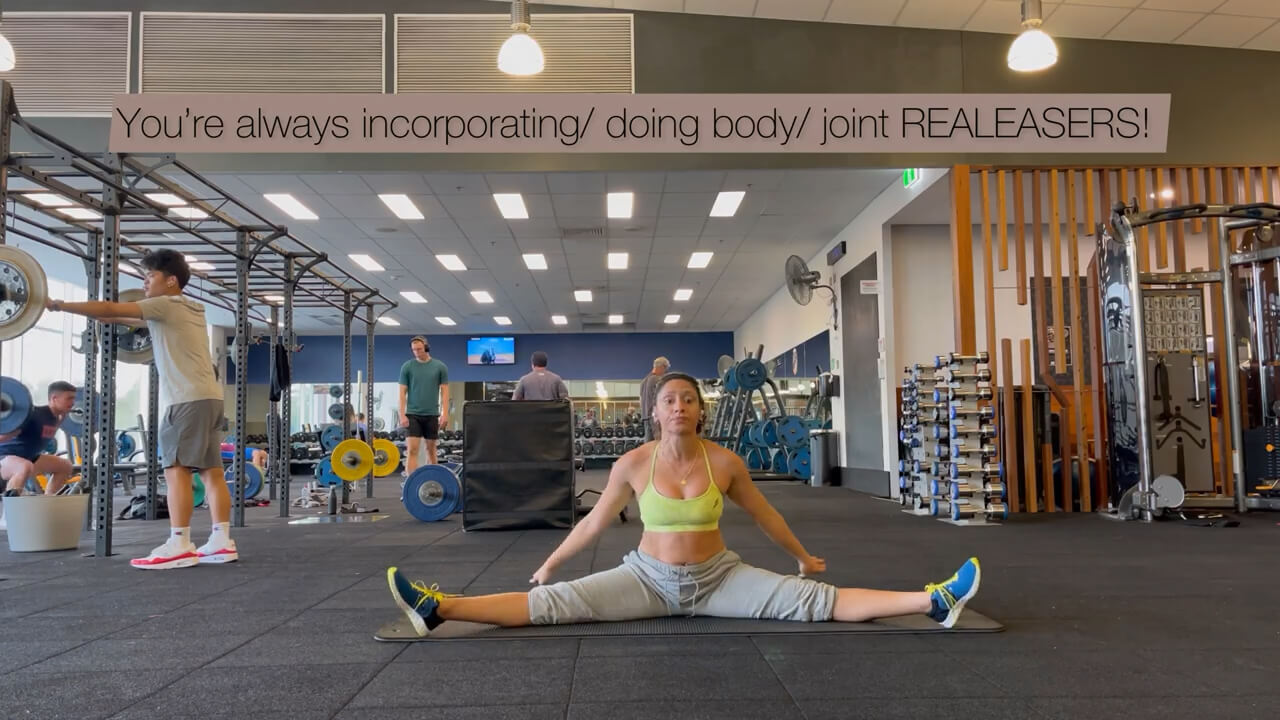
However, as an extreme example, applications like these will hopefully bring into debate how a movement mark can be found distinctive in the coming years. Because there is no legal definition of a movement mark, the most successful applications are currently for computer generated 'moving logos', as they can be assessed similarly to traditional marks.
If you need assistance with brand protection, brand enforcement or would like advice about your intellectual property strategy, please contact a member of our Intellectual Property team.
References
1 As of 4 February 2026
2 See, for example, RB (Hygiene Home) Australia Pty Ltd v Henkel Australia Pty Ltd (2024) 302 FCR285; Re Cadbury Ltd [2002] ATMO 56
3 Application CTM No. 001400092
4 IP Australia, 'Trade Marks Manual of Practice and Procedure', 21.9
5 AU Trade Mark No. 1840549
6 IP Australia, 'Trade Marks Manual of Practice and Procedure', 21.9
Author
Ben Coogan | Partner | +61 7 3338 7503 | bcoogan@tglaw.com.au
with Ivy Smith, Summer Clerk


%402x.svg)
%402x.svg)
Keep
learning
.svg)


About us
Thomson Geer acknowledges the Traditional Custodians of Country throughout Australia and their connections to land, sea and community. We pay our respect to their Elders past and present and extend that respect to all Aboriginal and Torres Strait Islander peoples today.